(These are excerpts from my book "A History of Jazz Music")
Creative music: the disciples
Once the founders of the AACM had shown how jazz musicians could lead the way
in creating a new form of music for the end of the millennium, the new
generation finished the program by further enhancing the status of the
jazz composer.
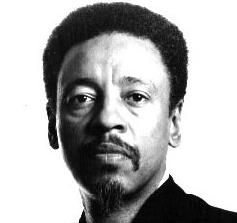
One of the best examples of Chicago's fusion of theoretical issues and
soundsculpting art during the 1970s was the career of
Henry Threadgill.
He is emblematic of how creative music proceeded along two parallel paths,
simultaneously exploring new techniques of texture (mainly through different
combinations/juxtapositions of instruments) and new techniques of composition
(influenced by contemporary chamber music but also grounded in the tradition
of black American music, from ragtime to free jazz).
The saxophonist cut his teeth in churches and dancehalls and military bands,
playing gospel, blues and rock music. Converted to creative music while
stationed with the army in St Louis, Threadgill debuted, in Chicago, both as a composer and as an alto saxophonist, on Muhal Richard Abrams's Young at Heart Wise in Time (august 1969). In 1972 he formed a trio, Air, with
bassist Fred Hopkins and percussionist Steve McCall, that immediately revealed
his strong compositional skills.
Relocating to New York in 1975, Threadgill became part of a booming underworld
of artists that liked to mix different kinds of art. Dance and theatre became
as influential on his artistic growth as the jazz classics.
Air Song (september 1975) contained four lengthy pieces, each for a
different lead instrument:
Untitled Tango for tenor sax,
Great Body of the Riddle for baritone sax,
Dance of the Beast for alto sax,
and Air Song for flute.
But the trio was truly "free" in the way they improvised around each other
with no clear leader, hiding individual identity behind collective identity.
Air Raid (july 1976) repeated the same format, with even more sophistication:
the violent Air Raid for Chinese musette and alto sax,
Midnight Sun for alto sax,
Release (sixteen minutes) for flute and hubkaphone,
Through a Keyhole Darkly for tenor sax.
The research continued on Air Time (november 1977), that boasted even
more adventurous solos, especially in three complex compositions:
the obscure No 2 for alto, the mathematical Subtraction and
Keep Right on Playing Thru the Mirror Over the Water.
Open Air Suit (february 1978) was a four-movement suite with the movements
(or "cards") shuffled around. Threadgill on alto sax, tenor sax, baritone sax
and flute was now dominating the proceedings.
Air Lore (may 1979), basically a nostalgic tribute to Threadgill's musical
roots, introduced a more accessible version of the band's sound, signaling
the end of the experience. Nonetheless,
Air Mail (december 1980) was still highlighted by the 18-minute C.T., J.L.,
and 80 Degrees Below (january 1982) was the trio's swan song, a return to the
format and the magic of the early years, particularly in
The Traveller, 80 Degrees Below '82 and Do Tell.
As an improviser, Threadgill seemed to create a different vocabulary and a
different persona for each instrument he played.
All of them shared an almost scientific passion for complexity. So much so that
McCall, the drummer, ended up sounding like the romantic soul of the trio (the
bass was mostly running after the reed).
Threadgill had already started a new project, X-75, a nonet with
four reed players (Threadgill, Douglas Ewart, Joseph Jarman, Wallace McMillan),
four basses and a vocalist (Amina Claudine Myers) that had debuted with
Volume 1 (january 1979), an album that replicated the four-composition
format of early Air albums and showed how far his ambitions had come
(notably Celebration and Fe Fi Fo Fum).
A "Sextett" (double "t")
which was actually a septet
(cornet player Olu Dara, trombonist Craig Harris, bassist Fred Hopkins,
piccolo bassist Bryan Smith, drummers Pheeroan Aklaff and John Betsch)
recorded When Was That? (october 1981), with 10 to 1,
When Was That and Soft Suicide at the Baths,
and (replacing Smith with Diedre Murray on cello)
Just the Facts And Pass The Bucket (march 1983), with
Gateway and A Man Called Trinity Deliverance.
Ancestral melodies were transformed into angelic bacchanals by a system of
performance that toyed with the timbres and roles of the instruments.
The Sextett was a micro-representation of the classical orchestra, divided
into three sections of strings, brass and percussion.
Threadgill was toying with the basic elements of the symphony without actually
abandoning the jazz format.
A new edition of this Sextet
(Rasul Siddik on trumpet, Ray Anderson on trombone,
bass, cello, two percussionists) recorded
Subject To Change (december 1984), with
Just Trinity the Man, Higher Places and Subject to Change,
and then (with Frank Lacy on trombone) You Know the Number (october 1986),
that offered more accessible material (such as the
Caribbean Bermuda Blues).
All these albums displayed his mesmerizing ability at deconstructing
jazz music and constructing complex, twisting architectures.
A new phase in Henry Threadgill's career began with
Easily Slip Into Another World (september 1987), de jure another work by the
Sextett (now featuring Hopkins, Siddick, Frank Lacy, Diedre Murray and
percussionists Pheeroan Aklaff and Reggie Nicholson),
but de facto a quantum leap in eclectic arrangements packed into shorter
pieces, from frenzied cartoon music (Award the Squadtett)
to nostalgic New Orleans marches (Black Hands Bejewelled),
from moody ballads to pure chaos, to chaotic mixtures of ideas
(Spotted Dick is Pudding, Let Me Look Down Your Throat or Say Ah,
My Rock).
Threadgill returned to the four-song format of Air with
Rag Bush And All (december 1988), whose longer selections
(Off the Rag and Sweet Holy Rag) displayed the growing
idiosyncrasy of his compositions, ripped apart by the tension between
the organized improvisation and
an almost parodistic revisitation of traditional forms.
A new septet, Very Very Circus, with two brass instruments
(Curtis Fowlkes on trombone and Threadgill on alto or flute),
two electric guitars (Brandon Ross and Masujaa), two tubas and drums,
further increased that tension between future and past.
The spirited, denser and ever more eccentric standouts of
Spirit of Nuff Nuff (november 1990), such as
Unrealistic Love,
Drivin' You Slow and Crazy,
Bee Dee Aff and
First Church Of This (Threadgill's best flute workout)
coexisted with almost radio-friendly numbers (Hope A Hope A).
Replacing the trombone with a French horn,
Too Much Sugar For a Dime (1993) focused on sonic exploration in
Little Pocket Size Demons and Try Some Ammonia; and,
to increase the sense of displacement, In Touch and Better Wrapped Better Unrapped added three violins and lots of percussion (the former also vocals).
With neither trombone nor French horn,
Songs Out of my Trees (august 1993) delivered pieces without saxophone but with three guitars (Over the River Club, Crea), a piece with accordion, harpsichord and cello (Grief) and the gospel-y Song Out Of My Trees with organ.
Carry The Day (1994) reintroduced the French horn and added
Chinese stringed pipa, accordion, violin and vocals (Come Carry the Day, Vivjanrondirski, Hyla Crucifer), but also indulged in more linear
jazz playing (Between Orchids Lillies Blind Eyes and Crickets).
Very Very Circus' chaotic music peaked (as far as chaos goes) with
Makin' a Move (june 1995):
Noisy Flowers was scored for piano (Myra Melford) and guitar quartet (no sax, no French horn),
The Mockinbird Sin for guitar quartet and cello trio,
and Refined Poverty for alto saxophone and cello trio.
The "regular" pieces (Official Silence, Like It Feels, Dirty in the Right Places, Make Hot and Give) for sax, French horn, two guitars, two tubas and drums harked back to the Sextett.
Threadgill pared down the ensemble to a quintet (Ross, Tony Cedras on accordion and harmonium, Stomu Takeishi on fretless bass, drums) to form Make A Move,
that debuted on Where's Your Cup (august 1996). Pieces such as 100 Year Old Game, Where's Your Cup, And This, The Flew and Go To Far merely increased the sense of puzzle-like hyper-fusion musical structures.
Replacing Cendras with Bryan Carrott on vibes and marimba, and introducing new
Cuban drummer Dafnis Prieto, caused Everybodys Mouth's a Book (february 2001) to
sound more constricted (albeit benefiting the austere Platinum Inside Straight).
A new ensemble, the acoustic, multi-ethnic and string-driven Zooid (British guitarist Liberty Ellman, Moroccan oud player Tarik Benbrahim, Puertorican tuba player Jose Davila, cellist Dana Leong, Cuban drummer Dafnis Prieto), debuted on
Up Popped the Two Lips (april 2001), had a more exotic and neoclassical feel
that better represented Threadgill's elegant eccentricity
(Around My Goose).
TM, ®, Copyright © 2006 Piero Scaruffi All rights reserved.

The violinist Leroy Jenkins,
who made his name in
Anthony Braxton's Creative Construction Company (the 34-minute Muhal on Creative Construction Company of 1970), became both a virtuoso
of instrument (extending the range of the instrument to become a more versatile
source of abstract sound) and a composer/improviser of "creative music"
(with a postmodernist take on the tradition of jazz, from spirituals to bebop).
Relocating to New York in 1970, Jenkins formed the Revolutionary Ensemble with
bassist Norris "Sirone" Jones and drummer Jerome Cooper.
The political nature of their music was less important than the format and
the spirit. Revolutionary Ensemble (march 1972), also known as Vietnam, contained one 47-minute long jam that meant to depict the horror of
the war. It was soundpainting at its most dramatic and poignant, but also at
its most chromatic and dynamic. After Manhattan Cycles (december 1972),
the three pieces of The Psyche (december 1975), one by each member, and Ponderous Planets on The People's Republic (december 1975), all from the same sessions, toyed with an impressive range of textural constructions. Leroy Jenkins played violin, viola, thumb piano and flute while Sirone (also on trombone) and Jerome Cooper used all sorts of percussion techniques. Sirone and Jerome Cooper used all sorts of percussion instruments.
In the meantime, influenced by the Jazz Composers' Orchestra, Jenkins had
assembled an all-star cast (Anthony Braxton, Kalaparusha Maurice McIntyre,
Dewey Redman, Leo Smith, Joseph Bowie, David Holland, Jerome Cooper,
Charles Shaw, Sirone and others) to record
For Players Only (january 1975), two sides of avantgarde,
the second being the more experimental (a sequence of solos by the various
players).
Faithful to the AACM's aesthetic dogma of extended solo improvisations,
Jenkins contributed to the opposite end of the spectrum
Solo Concert (january 1977) and especially Legend of Ai Glatson (july 1978).
He also cut the four duets of Swift are the Winds of Life (september 1975) with percussionist Rashied Ali.
His neoclassical ambitions emerged from a number of highbrow collaborations:
the vignettes of Lifelong Ambitions (march 1977), with pianist Muhal Richard Abrams,
the 21-minute electronic improvisation (with Richard Teitelbaum and George Lewis on synthesizers) of Space Minds/ New Worlds/ Survival America (september 1978)
Quintet No 3 for violin, French horn, clarinet, bass clarinet (Marty Ehrlich), flute (James Newton), off Mixed Quintet (march 1979),
and
Free At Last on Straight Ahead/ Free at Last (1979) with cellist Abdul Wadud.
Jenkins also composed
the dance opera Mother of Three Sons (1991),
the jazz-rap opera Fresh Faust,
the cantata The Negro Burial Ground,
the multimedia opera Editorio - The Three Willies (1996).
Off-Duty Dryad,
Themes & Improvisations on the Blues and Monkey on the Dragon
appeared on Themes and Improvisations on the Blues (1992).
TM, ®, Copyright © 2006 Piero Scaruffi All rights reserved.

Mississippi-born trumpeter
Leo Smith
moved to Chicago in 1967, in
time to join the "creative" bandwagon and found the Creative Construction
Company with saxophonist Anthony Braxton and violinist Leroy Jenkins.
But his persona was fundamentally different from the "scientists" of the
AACM.
Like Anthony Braxton, Smith developed his own musical theory and his own
notation system
("ahkreanvention" for scoring sound, rhythm and silence),
but, unlike anyone else in that school, Smith viewed
music as a vehicle, not as a goal; as a journey, not as a destination.
His musical vision first surfaced in the six ascetic solo
"multi-improvisations" of
Creative Music 1 (december 1971). By employing other sound-producing devices
besides the trumpet, he created eerie soundscapes
in the seven-minute Improvisations No 4 for found percussion and the
12-minute Creative Music 1 for trumpet, flugelhorn and "mobile sounds".
The 13-minute aFmie-Poem DancE 3 on flugelhorn
and the eight-minute Ogotommeli - Dogon Sage on gamelan percussion
mapped vast open spaces of music philosophy.
Not one note was wasted: Leo Smith was unique among creative musicians in that he aimed for the essential and the quintessential, rarely sounding rhetorical like Braxton or ornate like Abrams. He seemed to value silence more than sound itself.
That philosophy was better channeled into the two lengthy pieces of
Reflectativity (november 1974) for a trio with Anthony Davis
on piano and Wes Brown on bass: Reflectativity and T Wmukl D.
Smith's contempt for redundance translated into loose ensemble counterpoint
and a general sense of intimacy.
Smith formed New Dalta Ahkri with pianist Anthony Davis, saxophonist Oliver
Lake, bassist Wes Brown and drummer Paul Maddox. The sophisticated sound of
Song of Humanity (august 1976), permeated by Eastern spirituality, was best
represented by two Davis compositions,
Lexicon and Of Blues and Dreams, but also by Smith's own
Peacocks, Gazelles, Dogwood Trees & Six Silver Coins.
A peak of Smith's lyrical imagination was the six-movement
Mass on the World (may 1978),
an extended piece blending improvisation and composition,
performed by Smith (on trumpet, flugelhorn,
flute), reed player Dwight Andrews and vibraphonist Bobby Naughton.
The same trio penned the elegant, romantic 22-minute prayer Divine Love on
Divine Love (september 1978), while Charlie Haden was added on bass for the
15-minute Spirituals.
Smith, Andrews and Naughton were accompanied by bassist Wes Brown and drummer Pheeroan AKlaff for the 19-minute Images and the surreal Spirit Catcher on Spirit Catcher (may 1979), while
The Burning of Stones (inspired by West African and Japanese music)
matched Smith's trumpet with three harps
for one of his most pensive chamber pieces.
Smith had elaborated a theory of "rhythm units" based on Charlie Patton's blues
that helped him calibrate the relationship between sound and silence,
elementary sounds and compound sounds.
The same trio with Wes Brown on bass was documented on the live
Go in Numbers (january 1980), with the lengthy improvisations of
Go in Numbers and Illumination - The Nguzo Saba Changes.
Smith's sound was becoming precious and languid, besides pan-ethnic,
almost the opposite of the standard within the Chicago school he came from.
The different sound was due to a different philosophy, to a vision of
jazz as a religious form of art with the power to uplift frustrated people
and as a political form of art with the mission to liberate enslaved people.
On the other hand,
Ahkreanvention (1979) was basically "Creative Music 2", as it returned
to the same solo format of his debut album. Smith alternated on many instruments
during the five-movement suite Love Is a Rare Beauty and
Life Sequence 1.
And Smith contributed the longest track, Return To My Native Land II, to
The Sky Cries The Blues (january 1981) by
the 17-piece Creative Musicians Improvisers Orchestra (with Oliver Lake and
Marty Ehrlich on reeds).
Smith's underlying concerns for humanity became more explicit in the 1980s,
while the music opened up to all sorts of non-jazz influences.
Smith (on trumpet, flugelhorn, flute and thumb piano) was joined by a bassist and a drummer for the live Touch the Earth Break the Shells (january 1981), with Touch the Earth and Rastafari in the Universe.
Human Rights (march 1985) fused jazz with African, reggae and rock music, while incorporating instruments as diverse as koto, synthesizer and guitar, and maintaining the format of free jazz (the side-long improvisation
Humanismo Justa/ Trutmonda Muziko, recorded in 1982
with Tadao Sawai on koto, Peter Kowald on bass, and Guenter Sommer on drums).
Procession Of The Great Ancestry (february 1983), featuring Naughton and Kahil El Zabar on percussion among others (electric guitar, bass, tenor sax), found him singing and pay homage to great trumpeters of the past: Procession of the Great Ancestry for Miles Davis, The Third World Grainery of Pure Earth for Roy Eldridge, Celestial Sparks in the Sanctuary of Redemption for Dizzy Gillespie.
Smith (now renamed "Wadada", after becoming a Rastafarian, as fashionable at the time) basically parted ways with the austere, European-inspired research of Chicago's creative musicians.
The notable exception was Rastafari (june 1983), a free-jazz session for chamber ensemble (trumpet, soprano saxophone, violin, bass, vibraphone).
After a decade of neglect, Smith returned with
Cosmos Has Spirit (april 1992), live duets (mainly the 32-minute
title-track) between Smith (on bamboo flute, karimba and trumpet) and
percussionist Yoshisaburo Toyozumi,
and especially Kulture Jazz (october 1992), a solo album on which Smith took
care of trumpet, flugelhorn, bamboo flute, koto, mbira, harmonica, percussion, and, last but not least, vocals. This album introduced a tune-oriented
approach, both respectful of the jazz tradition and sentimental in revisiting
his personal life.
Chamber and ethnic compositions surfaced on
Tao-Njia (may 1996): Another Wave More Waves,
the multi-part requiem for Don Cherry, Double Thunderbolt,
and especially Tao-Nija.
These classical-oriented works exuded spirituality via the careful layout
of the timbres of ethnic instruments, in a way not too dissimilar from new-age music.
Smith also composed Odwira (1995) for twelve multi-ensemble-units, and Heart Reflections (1996).
The quest for a music of shadows continued with Prataksis (april 1997),
a trio with reed player Vinny Golia and bassist Bertram Turetzky, and
reached the zenith with Golden Hearts Remembrance (january 1997),
his most intense, intimate blend of ethnic folk, blues and jazz.
Performed by the sextet N'da Kulture
(David Philipson on bansuri and tambura, William Roper on bass and tuba,
Glenn Horiuchi on piano and shamisen, Sonship Theus on percussion,
Harumi Makino on voice),
the hypnotic 13-minute Golden Hearts Remembrance A Nur Bakhshad and
the romantic 12-minute Emmeya
the eerie soundscapes of the 12-minute Lotus Garden, the ten-minute Tawhid and the 15-minute Condor.
The Golden Quartet (2000), featuring drummer Jack DeJohnette, pianist Anthony Davis and bassist Malachi Favors, was instead one of his more conventional albums of jazz music (Celestial Sky And All The Magic), and the
quartet's follow-up, Year of the Elephant (april 2002), increased the impression of a Miles Davis clone (Al Madinah, Miles Star in 3 parts).
Smith proved to be one of the most sensational soloists of his generation on
Red Sulphur Sky (2001), that contained the lively suites
(not just abstract solos) of
The Medicine Wheel and AFMIE - Purity and Poverty for solo trumpet or flugelhorn.
Smith updated his art to the digital age with
Luminous Axis (august 2002), an ambitious set of chamber works for trumpet (or
flugelhorn), live electronics (including laptop musician Ikue Mori) and percussion, notably Caravans Of Winter And Summer for trumpet and four laptops.
In the meantime a new Golden Quartet had evolved, that featured Shannon Jackson on drums, John Lindberg on bass and Vijay Iver on electronic keyboards, as documented on the Islamic meditation of Tabligh (november 2005).
TM, ®, Copyright © 2006 Piero Scaruffi All rights reserved.

Chicago's trombonist
George Lewis,
who graduated in Philosophy from Yale University,
was emblematic of the second generation of AACM musicians. He pushed the
boundaries not only of jazz music but of music in general, experimenting with
interactive computer music and becoming a multimedia artist.
His groundbreaking Solo Trombone Record (november 1976) contained the 20-minute
dissonant and overdubbing tour de force of Piece For Three Trombones Simultaneously, a journey inside the soul and the history of the instrument,
and pioneered on the trombone the kind of extended techniques
that had been applied mainly to the saxophone.
Shadowgraph (november 1977) ventured into chamber jazz with the 13-minute Monads for trombone, piano (Anthony Davis), bass clarinet (Douglas Ewart), violin (Leroy Jenkins), soprano saxophone (Roscoe Mitchell) and cello (Adbul Wadud) and no bass or percussion, the nine-minute Triple Slow Mix for a trio of sousaphone (Lewis) and two pianos (Davis and Muhal Richard Abrams) that were recorded in separate stereo channels, and the eleven-minute Shadowgraph 5 - Sextet for trombone, piano (Abrams), flutes (Ewart), violin (Jenkins), saxophones (Mitchell) and cello (Wadud).
The fifth was only one of the Shadowgraph Series (1977) for "creative orchestra". Number 1, 2 and 3 were only recorded in october 1999.
These "rhythm-less" pieces sounded oneiric and otherworldly,
because Lewis sacrificed emotion and dynamics to foster textural and
subliminal trance.
The live in the studio 44-minute piece of Chicago Slow Dance (1977) for a quartet with Lewis (on electronics, trombone), Ewart (on bassoon, tenor saxophone, flute, bass clarinet), JD Parran (baritone saxophone, piccolo, Indian nagaswaram reed instrument) and Teitelbaum (synthesizer), released only four years later, presented an eerie landscape of short repetitive horn phrases, insect-like percussive noises, siren-like drones, sparse slow dirges, warped psychedelic timbres, pastoral flute melodies.
The side-long Imaginary Suite on George Lewis Douglas Ewart (october 1978), a duo with Ewart on flutes, was Lewis' first attempt at incorporating electronic instruments and electronically-modified instruments into the grammar of jazz music.
Homage to Charles Parker (1979) contained two side-long compositions
performed by the same quartet of Lewis, Davis, Ewart and RIchard Teitelbaum
on synthesizers. The extremely technical structure of Blues contrasted
with Homage to Charles Parker, a "tribute" to the jazz master only in
spirit (highlighted by a poignant Ewart alto solo). In practice, they were both studies on how to create impressionistic
soundscapes.
But Lewis was devoting more and more of his intelligence to multimedia
installations
such as Voyager (1981), his first major computer interactive composition,
in which the computer manipulates the performance of the improvisers in real time.
TM, ®, Copyright © 2006 Piero Scaruffi All rights reserved.

Tenor saxophonist Chico Freeman began as
a promising improviser. Morning Prayer (september 1976) featured a "creative" septet (Freeman on tenor, soprano, flute and pan-pipe, Henry Threadgill on alto, baritone and flute, Douglas Ewart on flute, Muhal Richard Abrams on piano, Cecil McBee on bass, Steve McCall and Ben Montgomery on percussion) stretching out on extended Freeman originals such as Morning Prayer, Pepe's Samba and Like The Kind Of Peace It Is.
Chico (1977) was mostly taken up by the 24-minute three-movement suite Moments, a duet with bassist Cecil McBee, and the 16-minute jam Merger, for a piano-based quintet (McBee, pianist Muhal Richard Abrams, drummer Steve McCall, percussionist Tito Sampa).
No Time Left (june 1977) featured a quartet with vibraphonist Jay Hoggard, bassist Rick Rozie and drummer Don Moye (and himself on tenor, soprano and bass clarinet) exploring the relationship between the traditional jazz quartet and the avantgarde jazz quartet in the 18-minute No Time Left and the 12-minute Uhmla.
Kings of Mali (september 1977), perhaps the best of the early days, featured a stellar quintet with vibraphonist Jay Hoggard, pianist Anthony Davis, bassist Cecil McBee and drummer Don Moye performing four lengthy Freeman originals.
The Outside Within (1978), whose centerpiece was McBee's 19-minute Undercurrent, but also included Freeman's The Search, featured a quartet with McBee, pianist John Hicks and drummer Jack DeJohnette.
The interaction between color and melody was the theme of Peaceful Heart Gentle Spirit (march 1980) for a rich chamber octet (flutist James Newton, pianist Kenny Kirkland, vibraphonist Jay Hoggard, cello, bass, two percussionists, and Freeman on tenor sax, flute and clarinet), including some old compositions besides the new Peaceful Heart Gentle Spirit and Nina's Song Dance.
Freeman then adopted the "new traditionalist" stance in earnest and devoted
the rest of his career to albums full of covers turned into muzak for yuppies.
Freeman also formed the Leaders, a supergroup with
trumpeter Lester Bowie,
alto saxophonist Arthur Blythe,
pianist Kirk Lightsey, bassist Cecil McBee and drummer Don Moye, that
recorded the mediocre
Mudfoot (june 1986) with Freedom Swing Song and Midnite Train,
Out Here Like This (february 1987), Heaven Dance (may 1988),
and Unforeseen Blessings (december 1988).
The four-saxophone septet Roots (including Nathan Davis, Arthur Blythe and Sam Rivers on saxophones and Don Pullen on piano) debuted with
Salutes the Saxophone (october 1991) and Stablemates (december 1992).
Freeman pursued a fusion of pop-jazz, world-music and hip hop with Brainstorm, that released Mystical Dreamer (may 1989), Sweet Explosion (april 1990) and Threshold (1993).
TM, ®, Copyright © 2006 Piero Scaruffi All rights reserved.

One of the few women of Chicago's creative music, and one of the few jazz composers with a mastery of blues, gospel and soul music, Arkansas-born pianist (and, more importantly, arranger)
Amina-Claudine Myers
was largely missing from the great recordings of the 1960s, despite joining Muhal Richard Abrams' band in 1966. She was more interested in composing and arranging vocal music. Relocating to New York in 1976, she debuted with an album of solo piano interpretations of Marion Brown's music, Poems For Piano (july 1979), followed by a lyrical Song For Mother Earth (october 1979), a duet with percussionist Pheeroan aklaff. Salutes Bessie Smith (june 1980) in a trio with bass and drums contained her 15-minute touching African Blues. Another trio recording, Circle of Time (february 1983), contained six originals that summarized her musical roots and her spiritual persona. She converted to funk-jazz fusion with Country Girl (april 1986), containing three extended compositions such as Country Girl, Blessings and Pain performed by a sextet with Patience Higgins on flute, alto sax and soprano sax, Ricky Ford on tenor sax, Jerome Harris on bass guitar, Reggie Nicholson on drums, Bola Idowu on percussion, and Myers on piano, harmonica and vibraphone (and a few of them doubling on vocals).
TM, ®, Copyright © 2006 Piero Scaruffi All rights reserved.
There was at least one white musician who, for a while, was a match for these colossi of creative music: trombonist Ray Anderson, who moved to New York in 1972, where he worked with Anthony Braxton (1978-81) and Barry Altschul (1978-80).
Anderson, a virtuoso of multiphonics and a schoolmate of trombonist George Lewis, was one of the musicians who pushed the limits of the trombone after the neglect of the bebop years.
Anderson debuted on Oahspe (november 1978) in an all-white trio with bassist Mark Helias and drummer Gerry Hemingway that was a slicker version of Barry Altschul's free-jazz trio (in which both Anderson and Helias were playing at the time). That trio evolved via Right Down Your Alley (february 1984) and You Be (november 1985) to become BassDrumBone, the first of many Anderson projects. basically, this trio made free jazz palatable to the traditionalists with their good-humored anti-intellectual approach while surgically operating on its corpse with a postmodernist perspective in the tradition of Charles Mingus.
Anderson's style at the instrument was a lot less cerebral than Lewis', and frequently downright ironic, reminiscent of New Orleans' marching bands, Chicago's rhythm'n'blues and California's funk-rock.
Anderson's schizophrenic style allowed him an equally schizophrenic career.
The Slickaphonics, a quintet formed with Helias, guitarist Allan Jaffe, and saxophonist Steve Elson, played avant-funk music on Wow Bag (march 1982), Modern Life (november 1983) and Humatomic Energy (may 1985).
His playful side emerged on It Just So Happens (february 1987), for a sextet (trombone, trumpet, clarinet, tuba, bass and drums) and erupted from
the riotous and clownish Blues Bred in the Bone (march 1988), performed by a stellar quintet with pianist Anthony Davis, guitarist John Scofield, bassist Mark Dresser and drummer John Vidacovich, and What Because (november 1989), for a similar quintet. The Wishbone Suite was the centerpiece of Wishbone (january 1991).
Anderson's comic ego found the ideal vehicle in the Alligatory Band (electric bass and guitar, drums, percussion and Lew Soloff's trumpet) that debuted with the hilarious Don't Mow Your Lawn (march 1994).
In the meantime, Anderson had joined George Gruntz's Concert Jazz Band for Happening Now (october 1987) and Charlie Haden's Liberation Music Orchestra for Dreamkeeper (april 1990) and played on the album by the New York Composers Orchestra (january 1990). He continued to be part of New York's avantgarde ventures, even if his solo and group recordings almost seemed to make fun of them.
George Gruntz's Concert Jazz Band (now featuring trumpeters Lew Soloff, Ryan Kisor, John D'Earth and Herb Robertson, saxophonists Tim Berne, Ellery Eskelin and Marty Ehrlich, violinist Mark Feldman, tuba player Howard Johnson, three trombonists, and pianist George Gruntz) performed witty Anderson music on Big Band Record (january 1993): Anabel at One, Lips Apart, Seven Monsters, The Literary Lizard, Don't Mow Your Lawn.
TM, ®, Copyright © 2006 Piero Scaruffi All rights reserved.
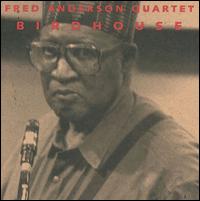
Louisiana-born tenor saxophonist Fred Anderson became a staple and a pillar of Chicago's creative scene despite being a bop musician at heart.
He co-founded the AACM and played on Joseph Jarman's pioneering Song For (1966). It took him twelve years, though, to emerge as a powerful voice of the avantgarde. The fact is that he always seemed to belong to another generation.
He was a player influenced by Sonny Rollins and, more importantly,
a composer of the same vein as Ornette Coleman and Charles Mingus.
His early recordings focused on that relatively structured aspect of his art,
therefore downplaying the radical improvisation of "creative" musicians.
The live Another Place (may 1978), by a quintet with trombonist Lewis, trumpeter Bill Brimfield and young percussionist Hank "Hamid" Drake, contained
the 23-minute Another Place, the twelve-minute Saxoon and the ten-minute The Bull.
The live Dark Day (may 1979), in a quartet with Drake and Brimfield and
without Lewis, debuted
the 18-minute Dark Day and the 18-minute Three On Two.
Yet another live recording,
More compositions for quartet were recorded in those years, but would be
released only much later:
the 16-minute Twilight, on The Missing Link (september 1979),
the 17-minute A Ballad For Rita, on
The Milwaukee Tapes (january 1980),
etc.
In 1982 Fred Anderson opened the "Velvet Lounge" that soon became the epicenter
of Chicago's creative scene. For more than a decade very little was documented
of his sessions.
A quartet with pianist Jim Baker, bassist Harrison Bankhead and drummer Hamid Drake was finally documented on Birdhouse (february 1995), its highlights
being, again, Anderson's compositions:
the swinging 18-minute Birdhouse (a showcase of group interplay and solos), the bluesy 16-minute Bernice, the 15-minute bop excursion Like Sonny and the 14-minute saxophone-drums duet Waiting for Mc.
Chicago Chamber Music (may 1996), for a
trio with bassist Tatsu Aoki and percussionist Afifi Phillard,
was more openly free jazz (the 20-minute Grizzle and the 14-minute Afro Asia).
TM, ®, Copyright © 2006 Piero Scaruffi All rights reserved.

While he did not release any record during the 1970s, white saxophonist, trumpeter,
vibraphonist and drummer Harold "Hal Russell"
was instrumental in keeping free jazz alive in Chicago.
His NRG Ensemble, formed in 1979 and first documented on
NRG Ensemble (may 1981), became the vehicle for his
extroverted and eccentric compositions, such as the
19-minute Cascade on Generation (september 1982), featuring
baritone saxophonist Charles Tyler.
His sense of humor, somewhere between Albert Ayler and Frank Zappa,
was influential in mitigating the grave tone of creative music.
TM, ®, Copyright © 2006 Piero Scaruffi All rights reserved.
Next chapter | Back to the Index
|